Gift Yourself Presence to Your Heartache

I am in Fundamental Political Shock. Shocked, surprised and sad are just the beginning.  Hurt, deceived, angry, and stupid are also some of the feelings.  I want to hug my children and explain to them…explain what?  Today we are just surviving.

The first and last thing I want my kids to learn from today is that when we are on our Anger Mountain* lets start by focusing on being gentle. To ourselves.

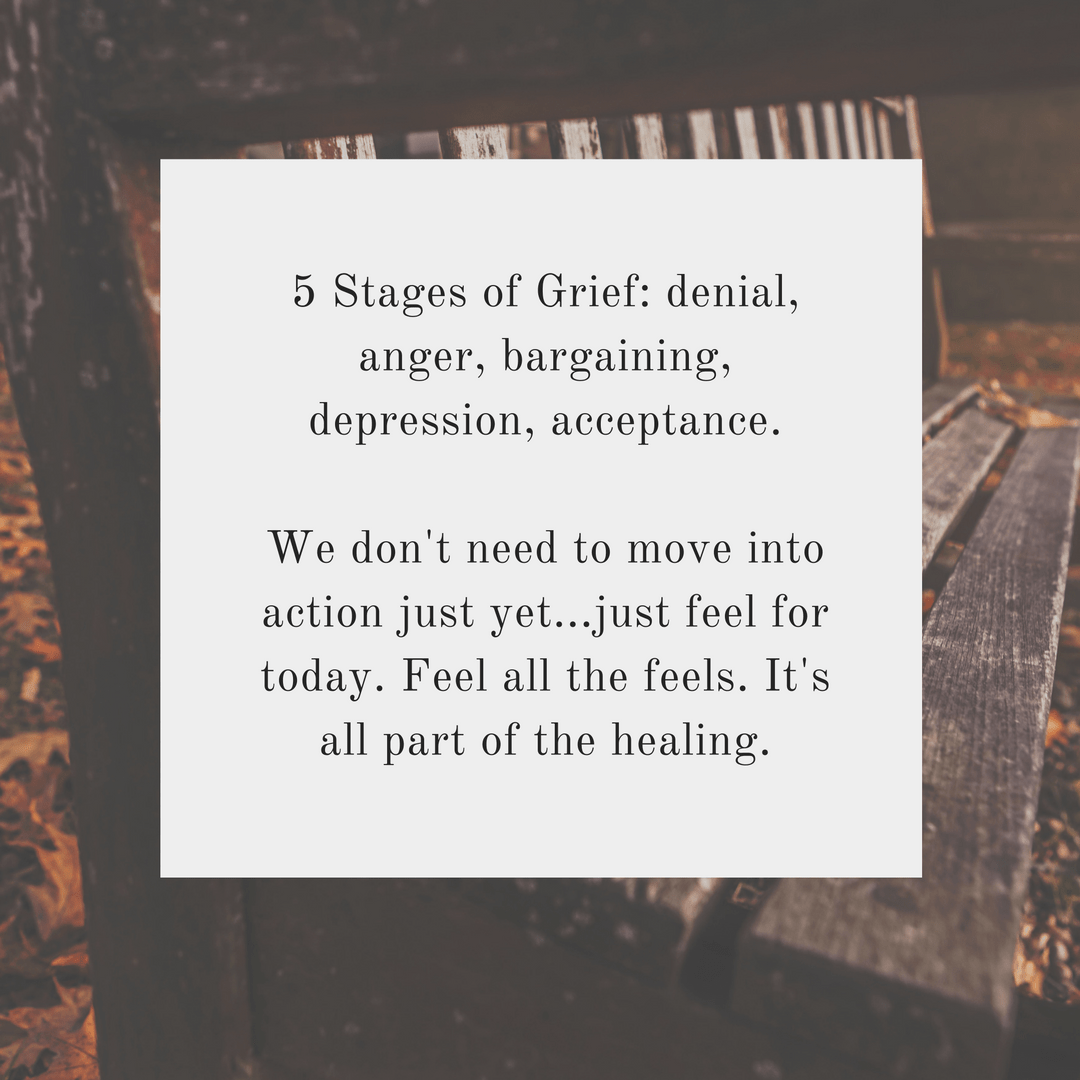
The healing and recalibration process begins by starting with our feelings.

But its hard.  On one hand it’s personal.  This was not an affront or attack on our physical body but on our ideas.  But our ideas are just that ideas.  They are not who we are: we are our spirits, our hearts, our souls.  So let’s extend a physical hand and actually share our convictions, dreams, hopes.  Lets accept our vulnerability and be open to the differences percolating out there.  Lets not come up a cognition-driven explanation to satisfy our egos need to understand.  The reality is that people all over the world and our country are really different from us.  That is what we supposedly celebrate. So let’s walk with them. Let’s just be present with them and not try to talk through the differences or even celebrate our similarities-first lets just be.  And find a way to be OK with not doing–pro or against their ideas.

But I also feel stupid because I bought the lie.  I guzzled it up and proselytized it: Media made us believe that it was about a binary option; that this was: bad vs. good, intelligent vs. stupid, morally elite vs. financially elite.  This was never those things and we all drank the media’s kool-aid.

The lesson for our kids is that it is ok to be and not do.  We will do tomorrow. Today we will just be in our feelings.  Feel our feelings.  Accept our humanity.  Adults don’t always have all the answers and we can teach our kids that we do not always use our brains to solve problems. Our hearts come first.  And right now our hearts ache so let’s start there by dwelling in that, allowing the feels, and being gentle to ourselves.

*Anger Mountain is a way I illustrate anger to young children.  Being angry is like hiking a tall mountain–every step towards the top is harder than the last and at the top, you burst with feelings and end up feeling smaller, less empowered, more enraged.  The opposite also exists: Happy Hills.  Happy Hills are also steep, but hopefully more frequent.  And when you get to the top you feel bigger, exuberant, empowered.  So the goal when the child starts to feel Anger Mountain is to help them identify and choose to take other “paths” that can lead them towards a Happy Hill.  The paths don’t have to be positive emotions but rather useful feelings to get through the journey: sadness, fear, helplessness are just some.  It is ok to be in those feelings and need some time to work through them.  And holding hands with the right partner on those other paths always makes them easier to travel.  (And as a sidebar to that; as a parent, I hope to be that partner for my children but it is important to accept if they choose a different journey-worthy person).

What are you feeling?  What are the physical symptoms you feel?

How will you be gentle to yourself today?

← Back

Thank you for your response. ✨

Warning
Warning
Warning

Warning.


(c) 2016, Nurture: Family Education and Guidance

Helping Your Child Through Bold Anger: Crisis Management 101

“When we are our angriest, we are our stupidest.”

As a school counselor one of the trainings I went through was called Therapeutic Crisis Intervention.  It is a way of understanding crisis as an Unknown-2.jpegopportunity to connect and teach new behavior and I have found it is also helpful in parenting and raising children.   The Chinese define crisis as danger + opportunity.   This is a helpful way of looking at a potentially “hot” situation because it instills hope that their will be something positive to come of the difficult behavior.

The goal of any intervention is for the child to come away empowered and better able to self-regulate and solve problems without adult help.  What one does not want to happen is for a power struggle to ensue.  Power struggles will only encourage the kid to view their parents as people who should not be trusted, kept at an arm’s length, and not really caring about their autonomy (ability to govern ones-self).

The 5 phases of the Stress Model of Crisis are: the baseline state, the triggering phase, the escalating phase, an outburst (violence, screaming), and recovery.

When a child is in a baseline state they are functioning normally.  When a child is triggered you may want to ask yourself:

1. Why did this happen today, and not yesterday?

2. Is this typical behavior for my child?

3. Is my child expressing a need? 

4. Is this developmentally typical? 

5. Does this behavior reflect an implicit or explicit way of being in our family during a crisis?

(sidenote: these questions are very helpful if you are trying to understand why YOU, as a parent/care-taker, were triggered by a situation.  In addition to these questions you should ask yourself: what happened in my childhood that may have contributed to these feelings.)

If your child’s behavior has escalated it is important to not escalate with them.  It is a luring trap to be weary of because it is so easy to drawn into a power struggle, succumb to your triggers as a parent, act immaturely (yell, threaten), and say/do things to your children that your parents said/did to you that you swore you would never repeat.  So how do you not escalate with them?  Ideas could include: empathize with the fact that they have these big of feelings, take a moment to get perspective on the situation, take a deep breath, walk away, or ask for help.

Now, if a child’s behavior has escalated and is now in the outburst phase some thoughts to consider: is this child’s behavior a threat (to himself or others or property)?  Have other interventions been tried (change environment, talking to kid)?  Physical restraint is NEVER a first choice option but if your kid is acting in a way that could pose serious harm, intervention is warranted.  Carefully and gently restrain child and tell them “I am not going to hurt you, but you may not hurt me.  When you are calm I will let go.  Lets take a deep breath together.”  It is imperative that parents know that physical restraints must never be used as  (a) punishments, (b) consequences, or (c) for demonstrating “who is in charge”.  Not ever.  Also, restraints must be stopped as soon as your child is no longer a risk of harm to self or others.

Once the child has calmed down take them to a quiet place away from distractions.  Face them, get on their eye level or below, and listen.  Speak calmly and respectfully and make sure they understand.  Ask you child to think about outcomes of his behavior and brainstorm other behaviors and their outcomes.  Don’t make it personal, make it factual.  Give you child some time and space to think and do not pressure them to say the “right” thing, remind yourself that they are in fact learning and that is a process of testing out right and wrong ideas.  That being said, do correct them if they give suggestions that would not be appropriate.  End the conversation with a hug or other gesture of love and affection to remind them that you love them despite them having behaviors that you may not love. 

A universal goal of most parents is to create trusting and caring relationships with their children. Showing kids exactly how to treat people, and how they should expect to be treated by people, even during difficult times is a critical skill.  With a little knowhow, parents can feel confident to help their kids even through the boldest of emotions.

← Back

Thank you for your response. ✨

Warning
Warning
Warning

Warning.

Practicing Self-Compassion for Genuine Growth

Kids are not born with manuals which leaves parents totally confused at times, but they are somehow born with enlightened knowledge of how to push all of our buttons.  At. Exactly. The. Right. Time.  And while simply being kind to your kids is an obvious virtue, it can be really REALLY hard at times (cue in kid screaming “wipe my butt” at 5:45 am).   But if you are not kind to yourself, how can you role model the behavior you want your kids to live?  How does one practice self-compassion?compassioisaverb.png

Self-compassion can be described as kindness in the face of failure or sense of inadequacy, a mindful approach to negative emotions, and recognizing that one’s experience is part of the common human experience.  It begins with awareness of your internal state and continues onto having empathy for that feeling.  It is a sort of external awareness of your internal state.  An acknowledgement of ‘these feeling are here, but they are not me.’  It is a state of non-judgement, just acceptance of the as-is.  After all, am I not just a human being with a human body, in a world of human thoughts? That’s ok.

This past weekend I went to NYC for a conference (with Dr. Shefali Tsabary on Conscious Parenting).  I went to this conference by choice (and it was fabulous) but I was scared.  I was worried about traveling alone, flying, getting in/out of the city, navigating to where I needed to go, knowing no one, etc.  I was stressed, to say the least.

I can talk through the judgement I had towards myself and own it as if it were the facts (how dare I, a capable and strong woman be scared?) or I can look through the lens of kindness (going to a chaotic new place alone is stressful).  And ask myself how would I treat a friend who told me the same story ?  How would I treat my child in this situation? Of course I would be compassionate and empathetic.  So why not be that way towards myself?  It was also fair to acknowledge that I was not the only one who probably felt this way.  Accepting the common humanity of this issue helps to process it as external and not a part of Who I Am.

In my mindfulness course this week I heard this quote:

“The body is just doing what it does – it is affected by what food goes in and what energy we put out – but it simply follows the laws of nature. It is so innocent. And it is sort of tragic that we’re often so harsh with our bodies and body image. Part of mindfulness practice is opening to the innocence of our bodies and learning to be gentle. This is a deep learning.” –Mindful Schools, Introduction to Fundamentals Training: Week 3

So when my child needs help “wiping” before the crack of dawn, I need to remember to be kind.  The little guy just needs help.  Plain and simple.  It has nothing to do with trying to torture us.

Traveling to NYC was a good reminder to be gentle with myself. I am a human with thoughts, feelings, and behaviors but none of those define my being.  My being is the person I truly am.

← Back

Thank you for your response. ✨

Warning
Warning
Warning

Warning.


(c) 2016, Nurture: Family Education and Guidance

#crazyawfulparenting

This morning I was awakened.  Awakened to my behavior by my two little boys.  It started when my 5 year old son went over to my 3 year old son and shot water out of his water bottle and all over the little one.  Without a moments pause, I asked my older son why he did it.  But I didn’t just ask in a mild, polite, I-actually-care-what-you-have-to-say kind of way.  No, I asked like it was a rhetorical question and it didn’t matter what he was going to say.   So when he didn’t have an explanation, I yelled at him.  Then I sprayed water on his shirt and said “how do YOU like that?”.  #crazyawfulparenting.  It wasn’t in his face and it wasn’t hot liquid but that is absolutely no excuse.  But that is what I did and I am not proud of it, in fact I am pretty embarrassed and ashamed.  Immediately WE were fighting instead of him and his brother whom he had actually wronged.  When he stormed off upstairs my little one said–and no, I could not have even made this up if I tried–he said: “mom, Ethan bullied me, but you bullied him more!”.  He was excited and was telling me in a congratulatory “we won” kinda way.

Whoah.

In Dr. Shefali Tsabary’s books on Conscious Parenting, she talks about how parents use their power over kids and how we should really be looking at letting our kids be our partners or even guide us.  This teaching needs to be learned, embodied, and constantly practiced by parents, especially in the tough moments because parenting is hereditary.  Without awareness–real, raw, and honest–in the toughest parenting moments, one will tend to do exactly what they swore they would never do.  Parenting is hereditary because it is learned, passed on, and subjective to the environment we have been exposed.  It is not genetic because it does not come from our actual DNA.  This is an important distinction because it gives parents the awareness that parenting is a direct product of how you were parented unless you are consciously rebelling against that and learning new strategies to use AND putting those strategies into use.  Parents do have the power to change themselves every single day and many parents would agree they want to be different than their parents.  (I have wonderful parents in so many ways, but they are not without their misgivings and how I was treating my son was an unconscious and automatic response that goes back to how I was raised.  But is that forgivable?)

I want to be better for my kids.  I took a deep breath and softened my heart and harnessed the conscious parenting teachings of Dr. Shefali and went up to his room.  At this point he was hiding underneath the covers of his bed.  He was rejecting my admonishment to get dressed and I couldn’t blame him.  It was me who had taken a typical 5 year old behavior and turned it into a huge blow up.  I had made him feel bad about himself and horrible about me and even worse about our relationship.  I felt really bad; I could have easily deflected this situation away from my ego and on to his poor behavior.  But truly and most vulnerably, I had to admit to myself, and to him, that he didn’t deserve to be afraid and feel bad about himself or to hate his mother.  He deserved to be listened to, taught, and guided with heart.

As I sat down on his bed and apologized (harnessing all my Yom Kippur –the Jewish day of Forgiveness–energy from the day before) he rejected me.  I tried again and again.  I admitted that I treated this situation very poorly and that I should have stopped, taken a deep breath, and asked for help.  I should have done exactly what I want him to do when he gets angry.  It wasn’t a time for silliness–this interaction was gravely important to him and to me– I gave him my authentic heart and a sincerely apology.  Eventually, instead of insisting we hug it out (I didn’t want to use my power to force him to move on–what good would that do?) I asked him if he wanted me to leave.

I took a deep breath and was ready to do whatever he needed.  It wasn’t about him spraying water, it wasn’t about him not getting dressed, it wasn’t about him yelling or trying to hit me.  It was about my wrongdoings and how I got caught up in the moment–flight or fight–and I fought.  Eventually the tension in the room settled and he realized I was truly apologetic and yearning to be better and he said I could stay.

He bounced up like kids do (isn’t their resilience something to be we should envy?), got out of bed, and asked me if he could show me something.  Despite the fact that he was bordering on being late for school, I knew we needed to repair the relationship.  He went to grab a ziploc bag–I thought it was full of pins and he was going to prick me with one.  I would have wanted to do that if the situation were reversed.  But he actually grabbed his bags of rocks.  A collection he built this summer that we both enjoy looking at and talking about.   We talked about the pretty ones and the broken ones in a matter of fact way.  He then got dressed, went downstairs, and started writing “I love you Mom” on paper.
We repaired.  It is possible to change and while this example illuminates my wits end, everyone has their own version of what that looks like. The problem lies in being stationary with that behavior and not willing to make yourself vulnerable to self-
reflection. It’s hard to do but fear should not prevent growth because our kids matter. A lot.  And we have a lot to learn from our kids.  Let’s listen to them and transform ourselves so that we can model the type of humanity we want them to give and receive. They deserve our best.

Let’s listen to them and transform ourselves so that we can model the type of humanity we want them to give and receive.

← Back

Thank you for your response. ✨

Warning
Warning
Warning

Warning.


(c) 2016, Nurture: Family Education and Guidance


Parenting is Not an Instinct

The idea of the ‘maternal instinct’ is old, tired, and culturally irrelevant in this day and age; what ALL parents–mothers and fathers– must start hearing is that parenting is a muscle and a mindset.  Instinct implies either you’ve got it or you don’t.  Parenting is neither of those things.  If you adapt easier to your role as a parent, great.  Good for you.  That’s not typical.  If you feel sometimes inadequate, often stressed, and frequently confused–congratulations, you’re A PARENT.

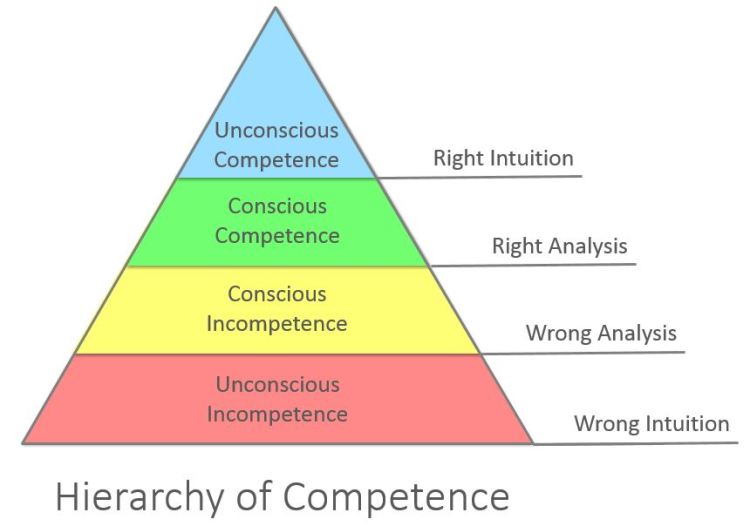
Undoubtedly there are some natural inclinations that do exist and scientists have proved this time and time again (example: we are biologically programmed to want to snuggle our babies).  But it would be amiss for parents to think that the birth of their first child comes a graduation cap of achievement for themselves.  Birth is just the beginning of the journey and you are never an expert at the beginning of a journey.  Malcolm Gladwell says it takes 10,000 hours of doing something to be considered an expert.  But the problem lies within the fact that your children are not static beings and their constant development requires constant new skills to train your parenting muscles.  Training your parenting “muscles” takes intentional practice until it becomes muscle memory and you do it automatically with unconscious competence.  Before parents can reach unconscious competence their must be an entire journey of consciousness–raised raw awareness of their own needs and desires.  And truly that journey never ends.


Competence_Hierarchy_adapted_from_Noel_Burch_by_Igor_Kokcharov.jpg

Mindset is another valuable way to look at parenting.  Mindsets are beliefs—beliefs about yourself and your most basic qualities. Think about your intelligence, your talents, your personality. Are these qualities simply fixed traits, carved in stone and that’s that? Or are they things you can cultivate throughout your life?

People with a fixed mindset believe that their traits are just givens. They have a certain amount of brains and talent and nothing can change that. If they have a lot, they’re all set, but if they don’t… So people in this mindset worry about their traits and how adequate they are. They have something to prove to themselves and others.

People with a growth mindset, on the other hand, see their qualities as things that can be developed through their dedication and effort. Sure they’re happy if they’re brainy or talented, but that’s just the starting point. They understand that no one has ever accomplished great things—not Mozart, Darwin, or Michael Jordan—without years of passionate practice and learning.

Flex, stretch, grow, and practice practice practice.

Mindset and muscle. Flex, stretch, grow, and practice practice practice. If you are feeling like your kids are not “doing childhood” the way your envisioned it for them, that is OK.  Being conscious, present, and attuning yourself to their needs (as opposed to your  needs or your projections of what you think they need) will allow them to grow into their own authentic self.  Believe in cultivating your own truths and let your child teach you theirs.  Follow their lead, strengthen your skills, and practice your parenting intentionally to feel competent in your journey.

What parenting skill do you need to practice?

← Back

Thank you for your response. ✨

Warning
Warning
Warning

Warning.

(c) 2016, Nurture: Family Education and Guidance

Giving Trust the Conscious Parenting Way

Tonight my husband and I genuinely shocked our 5-year-old son (and ourselves).  He announced he was done eating mid-meal because he was ready for dessert.   He hadn’t touched a bit of his brisket –which he loves — but was excited to eat Nana’s double chocolate layer cake which had been staring him square in the eyes since we arrived yesterday.  We were in the middle of  a proclamation about how he had to eat 4 bites more if he wanted to eat dessert.  This has been the typical pattern for us–ordering x bites more to get x reward–and truly we thought this was out of love and concern.  My kid would have whined, stuffed himself by our conditions to eat more than his body wanted and been unconsciously reminded that he is not trusted to make decisions about his body. Conscious-parenting-fail.

“Conscious Parenting means you spot the gap between the lesson you intend to teach and the lesson your kids are learning. Then you adjust your technique and improve messaging”

Instead, we tried a different approach tonight and adjusted our message: “you are going to get dessert whether or not you eat more dinner, but you do need to be reminded of couple things before you make that decision.  First, besides from dessert, this is the last food you will have until breakfast tomorrow.  We will not entertain whining or begging later if you tell us you are hungry.  And two, you are getting one small serving of dessert so don’t depend on that to fill you up significantly.”

We are desperate for him to learn how to be aware of his body’s hunger (and emotional) signals–so why would we not get be him the chance to practice just that?  Why would we interject our worries about his fullness with a really quite random number of bites?  To satiate his hunger or our fear?  Well we’re human and parenting is a muscle.  Conscious parenting takes intention and practice until it becomes automatic because of the neural pathways (muscle memory) that gets created in the brain.  The fate of the firstborn is that he is our guinea pig–we are learning to step back from our egos’ fears and allow him to unfold with the gift of allowing him practice to learn new skills and that means sometimes learning the hard consequences. It also means that we have to try out new approaches in our parenting and adjust as necessary.

With our egos aside, he ate some more bites of pepper. A couple bites of challah. And then a small piece of cake. He left the table with his dignity intact and with an affirmation of trust from the people who love him most.  It will be a good new year.

1. For more read: http://itsnotaboutnutrition.com/2016/09/20/improve-messaging/

← Back

Thank you for your response. ✨

Warning
Warning
Warning

Warning.

Parenting with Rewards and Intrinsic Motivation

Unknown-1.jpeg

Behavior.  Ah. There is so much noise out there on the internet about how to get your children to behave better.  The commonly accepted way of getting your children to do something usually comes back to what social scientists refer to as Behaviorism.  Behaviorism means conditioning someone to alter certain behavior patterns in spite of thought or feeling.  There is an entire branch of social science devoted to exactly how this can be done called Applied Behavior Analysis.  It is fascinating because used specifically and scientifically, you actually can get your child–or dog, for that matter–to complete any task you want.  But it is not a perfect answer for parenting a child (with average non-pathological behaviors) for a number of reasons.

A part of behaviorism that parenting literature is ripe with is the idea of positive reinforcement.  A simple explanation is: “Do this and get that“.  This can be very valuable to use as a parent but should not be the model of shaping behavior for one to use in the long-term.  I will explain further but first lets look at how is this different that a bribe.

Bribes are when you give the reward before the behavior is completed.  (ex.  Your child asks for a new toy when you are walking through the store.  You oblige and give them the toy but tell them that you expect they are going to clean their room when you get home).

Positive reinforcement is when you complete the behavior and then get the reward.  (ex. Your child asks for a new toy when you are walking through the store.  You oblige and tell them that AFTER they clean their room, they can have the toy).

Bribes are ineffective because the child has no motivation to complete the desired task because they already have the reward.  Positive reinforcement, on the other hand, gets the behavior completed and is therefore considered effective.

While positive reinforcement does get the behavior completed, the problem lies in giving rewards for completing behavior.  Implicit in positive reinforcement is a power dynamic that tells kids that they are less than the adults.  The problem with having this belief is that you are trying to raise individuals with thoughts, feelings, and hearts and a controlling paradigm does not teach kids to act responsibility, it only elicits compliance. Simply stated by Alfie Kohn in his book “Punished By Rewards” he asks: “Do rewards motivate? Yes, they motivate to get more rewards”.  So yes, you will get the behavior completed, but only because their was a reward.  There have been scientific experiments that actually prove that “children whose parents believe in using rewards to motivate them are LESS COOPERATIVE AND GENEROUS than their peers” (Kohn, p.174)

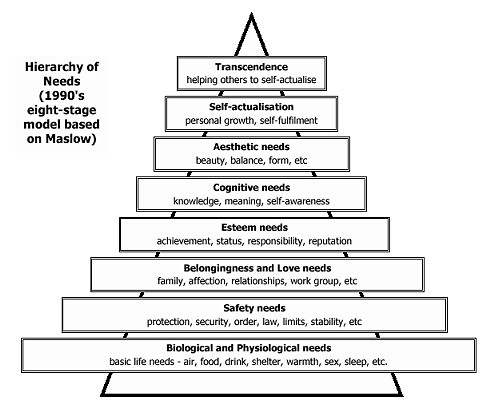
So what about punishment? How does that fit into this equation?  Punishment reinforces the power dynamic between parent and child to an even greater extent and this can be detrimental to a positive parent-child relationship where your child sees you as someone to be turned to and trusted with the good and the bad that they need help sorting through as they mature.   While a parents ego might feel good for having power, a child will feel unimportant, incompetent, impaired, weak, and unable which are exactly the traits you do not want someone who is learning about how to function as an individual in the world to have.   Your relationship with your baby might be a matter of providing for mostly physiological needs but as children develop they need parents to guide them through the higher level needs as shown below on Maslow’s Hierarchy of Needs:

img_1003

So the question becomes, if we are not supposed to use rewards to get our children to behave in a certain way, how can we elicit compliance when we want something to get done?  It is time to talk about intrinsic motivation.

“There is a difference between forgiving ourselves an occasional blunder and refusing to admit that certain approaches are blunders” (Kohn, p.233)

Instead of using your power to exert control or manipulation over your child, try tap into their innate desire to solve problems positively.  Think about the content, collaboration, and choice.  Content refers to whether the behavior you are trying to elicit is necessary and developmentally appropriate.  Then, work with your child to collaborate on possible ways to get the behavior done.  This problem-solving technique views the child as a parter who has equal power in coming up with solutions, not merely a droid who will do as we say.  Give your child practice in problem solving and they will learn how to solve problems.  Tell your child what to do all the time and they will always be looking for direction to follow.  And finally, the final part in how to improve our child’s intrinsic motivation will be to give them choice.  Let the kids be a part of choosing how the desired action will be done.  Empowerment for a child does not have to mean disempowerment for a parent–it means you are doing your child (and yourself) a favor to unfold this human into their full potential instead of forcing your will on them.

I encourage you to process this information and come back to me with questions and comments. I am available to meet privately or speak publicly on this topic.   Please contact me for further information.

Sources:

Kohn, Alfie. Punished by Rewards: The Trouble with Gold Stars, Incentive Plans, A’s, Praise, and Other Bribes. Boston: Houghton Mifflin, 1993. Print.

Tsabary, Shefali. The Awakened Family: A Revolution in Parenting. New York: Viking, 2016. Print.

← Back

Thank you for your response. ✨

Warning
Warning
Warning

Warning.

(c) 2016, Nurture: Family Education and Guidance

Conscious Parenting: A Paradigm Shift

Conscious Parenting (aka. “awakened parenting”) is about having a certain mindset towards raising our children.  It is not a set of simple rules but a whole way of approaching your job as a parent.  It is a paradigm shift from parenting the “old way” through adult power to parenting by seeing our children as our guides.  Dr. Shefali Tasbary describes being conscious as it relates to parenting as: identifying your ego’s needs (that were bred with fear and judgement) and releasing your children of those burdens so that they can fully live their own journey.

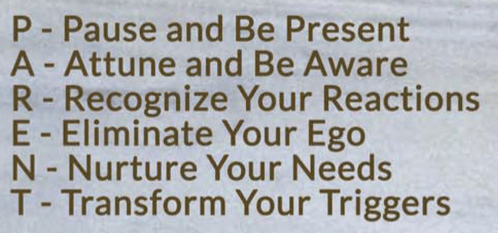
While we are raising our children, we are growing and healing ourselves from our own wounds and baggage.  Ideally we create a partnership of growth for both parent and child and accept that your child is not a smaller version of yourself.  Children have not lived the life you have lived and experience the same experiences–high or low, so they do not have the same perception of events.  If we influence our kids to think exactly how we think, we are not letting them live to their full potential and if we are not mindful of our own thinking than we will undoubtedly guide them from a place that is inattentive to their actual needs.  Our children are like mirrors–they show us our strengths and weakness, they are beautiful and humbling, and they are full of so much awe and also a lot of mundane.  To be a conscious parent you need to:

screen-shot-2016-09-26-at-2-21-16-pm

Does this resonate with you? Do you want to learn more?

← Back

Thank you for your response. ✨

Warning
Warning
Warning

Warning.

(c) 2016, Nurture: Family Education and Guidance

Rotate the Blame

Even if your children are the best of friends they will inevitably argue fight and blame each other at times.  Even the best parent doesn’t always know who is telling the truth and who did what.  So what do you do in this situation?  Blame the oldest?  Blame the youngest? You can probably justify each.  According to Marriage and Family Therapist David Gaesser of Pittsford, NY, you have five choices: blame both, blame neither, blame one or the other, or, quite simply, you rotate the blame.

Assuming you don’t know what happened and are not sure if your child is telling the truth than if you blame both you are probably going to get a lot of anger from the one who did not do said behavior.   If you choose to blame neither then one (or more) is getting away with whatever was done.  If you have no idea who did what and you always choose the side of one child and the other will eventually start to notice the unfairness. Realistically it probably won’t take long for resentment to stew and it will become a destructive cycle.

By rotating the blame, you choose which one is going to get in trouble for this time and the next time you have no idea who did what, choose the other.  This will teach the children that when they create commotion, the caregiver is not going to make assumptions or judgements or take sides.  Instead, the caregiver is going to do the best he/she can to find facts and whey they can’t–and sometimes you won’t– rotate the blame.

*If you are having problems with sibling rivalry-we can help through private coaching sessions.  We also highly recommend the book: Siblings Without Rivalry: How to help your children live together so you can live too By: Adele Faber and Elaine Mazlish


Routines, routines, routines

Starting a new school year means starting new routines.  And like anything with kids, setting developmentally appropriate expectations is imperative.  Remember: clear boundaries are good for kids.  Kids feel safety knowing what is expected of them (yes, even teenagers).  You children’s teachers (whether it be pre-school or high school) use the first few days of school to set their classroom expectations and you should definitely capitalize on this transitional time and use the first few days/weeks to establish your new home expectations now that the school year has begun.

Other benefits of establishing routines: they enhance collaboration and cooperation within your family, they decrease power struggles, they foster task completion, they foster independence, and they help kids stay on task.

I recommend writing down a list (adding pictures for kids who are not yet reading) so that you can simply refer to the list as the year progresses and add or delete things as necessary.  It is good for kids to see that you are making an intentional and conscious choice to make routines a priority.  The choice of routine items and the order are dependent on your child’s age, abilities, and needs.

Think about what would make you mornings, afternoons or evenings run smoother and define those as expectations for your routine.

Morning routine suggestions: wake up, go potty, brush teeth, get dressed, make bed, put dirty clothes in laundry basket, make/eat breakfast, put shoes on, pack lunch, check backpack.

Afternoon routine suggestions:  put coat/shoes away neatly, empty backpack, do homework, eat snack, set table (or other chores), and play*.  Put it in the order that makes sense for your family. Some kids really need to just run around after a day of being at school whereas others might want to come home and do their homework to get it out-of-the-way before relaxing.  It is imperative that your child has some play or free time as part of their routine.  They are humans and need to let off steam so that they don’t explode with energy or emotions at an inappropriate time later in the day.

Evening routine suggestions: clean up from dinner, make lunch, shower/bath, pajamas, brush teeth, brush hair, layout tomorrows clothes, read, lights out (set a time).

*If TV is part of your routine (at any part of the day) I would strongly encourage you to put a time-frame on that  (30 min is reasonable for school age kids).  It is OK to say no TV during the school week, too, you make the decisions that are best for your kids and you set the conditions for them to rise.  (It is also ok to use TV as a reward for completing their list of routines…but be careful using rewards too much or too often.)

Their will be times when the routine needs to shift because of something out of the ordinary happening in your day.  Consistent use, not strict use, is the goal.  You want to show your kids how we flex and bend to meet the needs of our lives but still go back to the routine when it is possible because, again, routines give kids comforting boundaries and structure.

Kids will have the opportunity to cooperate and even behaviorally thrive if they know what the expectations are and are able to meet those expectations.  Remember: set yourself (and your kids!) up for success.