
3 Foundational Parenting Principles

The Parenting Philosophy of Rochester Parenting Coach can be summed up in 3 basic foundational parenting principles: KISS, set yourself up for success, and there is hope.  Essential to these principles is my mission is to empower parents with reflection, intention, and improved communication.  While my hope that your family dynamic improves, my intention is that is comes from the parents trying new approaches as a result of our work together not the kids simply learning new behaviors.  This will create confidence in parents and lasting change in their family.

The first principle is KISS–keep it simple, stupid!

So much of modern-day parenting is a bunch of stuff that gives parents anxiety that they aren’t (insert verb here) for their children.  While kids can be confusing for adults, they aren’t really too complex if you understand their emotional, cognitive, and behavioral development.  All kids (really, all people!) want attention, love, and to be cherished.  Yes, obviously you need some ‘stuff’ to raise a child but don’t be confused by what you want to give your child and what they actually need.  Needs are: a place to sleep, healthy food to eat, toys to keep them stimulated, a safe environment, a good sleep schedule, medical attention when necessary.  Wants are: lots of toys, vacations, added sugar, new almost-anything.

Behaviorally, your kids–no matter their age–need boundaries and love.  They need to know what is allowed of them and what is not tolerated (like violence of any sort, for example).  Boundaries give them comfort because it lets them know your expectations and what they need to do to fulfill those expectations.  Love is a nonnegotiable need for all people.  Different kids accept love in different ways.  Some may want quality time, words of affirmation, gifts, acts of service, or physical touch (See 5 Love Languages of Children by Gary Chapman).   Give your kids lots of positive reinforcement when they do something you want them to do and give them love unconditionally–no matter what they do.

A simple environment will more likely translate in to a home of more emotional calmness.  When your child is quietly engaged in an activity allow them the peace and quiet to focus on what has captured their attention, no matter how trivial it may seem to you.  Too many toys in a playroom usually results in the kids playing with none of them.  Little children (5 and under) don’t care about expensive experiences–they care about attention from their parents.  If you do take them on an expensive experience (ex. far-away vacation, live theatre, fancy dinner) be honest with yourself that it is more about fulfilling your needs than theirs.   Overstimulation–in activities or environment–will cause anxiety for you and/or your young children–so try hard to keep it simple and have developmentally appropriate expectations!  And remember: the best things in life aren’t things.

It is important to understand your childs cognitive development so that your keep your expectations relative to their abilities.  Cognitive development refers to how they think, problem solve, and learn.  You want to push them just enough so they are interested to learn but not too much that they are overwhelmed and give up.  You want to clarify and simplify your expectations relative to your child’s development and try hard not to compare them to other kids.  Carol Dweck, well celebrated researcher on mindset, reminds us to celebrate the process of learning (which includes mistakes), not just focus on the outcome.  Being labeled “good” or “bad” (fixed mindset) can have detrimental effects on your child’s self-efficacy but being positively reinforced for their growth, hard work, and effort (growth mindset) will give them the encouragement and knowledge that continually learning is the optimal outcome whether they are 2 or 22.

The second principle is: Set yourself up for success.  Parenting is already a hard job–don’t make it harder by bringing your child into a situation that you know will not work out well for them (or you) and expect a miracle.  By adjusting your expectations–making them more realistic and honest with what their needs are–you will make your child and yourself happier, saner, and more relaxed.  Now, obviously there are times when we know we are bringing them into a situation that will be tough for them.  If this is the case, allow them to feel those feelings and recognize your needs versus their needs.  Are they/you upset because they/you are tired/bored/hungry? Are they/you upset because your plans changed? Are they/you angry because you are missing out on a fun time? Are they/you sad that you didn’t get to do what you wanted?  Do you have unreasonably high expectations for yourself?  When I had my first child, my only goal for the first 6 weeks of his life was to keep him alive and to shower everyday.  Seriously those were my life’s goals and some days, that was really hard.  As kids get older, you grow with them and learn to anticipate their needs.  Listen to that voice inside of you–it is the cultivation of a parental instinct and is gets better with the more experience you have as a parent.    

There is hope is the final foundational parenting principle of the Rochester Parenting Coach.  It simply refers to the fact that no matter how poorly behaved your kids are, how challenging they may be, how stressful parenting is, it can get better.  Ask for help early and often.  Don’t wait for little problems (my cute little 2-year-old won’t listen, ha ha!) turn into big problems (why won’t my teenager listen?!!?!).  I started this business after finding that my son was remarkably responsive to a well planned behavioral intervention and thought that everyone deserves to have some experienced eyes on their children and thus their parenting.  Be honest with yourself if you need help–this is a journey and even a slight adjustment can have wide-reaching positive or negative consequences.  You decide.  

← Back

Thank you for your response. ✨

Warning
Warning
Warning

Warning.

Parenting, Plasticity, and Neural Connections

“Where ATTENTION goes

neuro-firing flows

and neuro-firing GROWS” 

-Dr. Dan Siegel

HCDC_Levitt-Plasticity-Curve_SHARE-1024x720.png

As a school counselor, it was amazing to see kids cumulative folder.  The cumulative folder is the one that follows them from elementary through high school.  Parents never see it, but they do know everything inside.  It holds their report cards, list of schools attended and transcripts, and sometimes their school picture from each year ( it is seriously fun to see a grumpy teenagers elementary pictures).  In my experience, what I have seen is that the kindergarten teachers remarks are so frequently very parallel to the high school teacher’s remarks about the child.  Certainly they are usually (hopefully) different to reflect maturity and development, but usually a child’s personality is relatively static.  For example, if a kid was so frequently disorganized that the kindergarten teacher had to note it on their report card, typically that kid still struggles with organization in some way at the high school level.

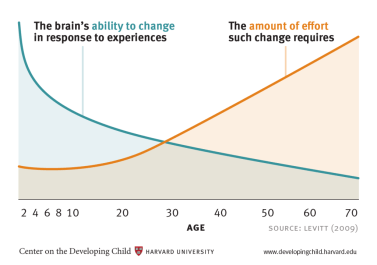
The sooner you become a more intentional, positive, proactive, and learned parent the easier the child rearing process will be.  Early childhood brain development sets the foundation for later development and you can reap the most benefits by learning how to parent while your child is very, very young (or even before birth).  All people develop something called neural connections.  Neural connections are the framework for learning.  Neurons are information transmitters and the better they are connected the better the child learns.  Building connections takes learning experiences like teaching your child: how to be soothed and how to self soothe, how to fall asleep, basic routines, how we behave at the table, how we communicate when we are upset, how we show someone we are listening, etc.  The brain is most plastic (malleable) while kids are very young (3 years old or younger) so the sooner you lay the foundation for those concepts the easier it will be to build on those connections and on to more relatively sophisticated skills.  It would be extremely difficult to teach your teenager listening skills, for example, if they never were taught and expected to use them before.

Do yourself and your children a favor by learning how to parent early on, addressing issues head on, and being honest with yourself.  It is dreadfully hard to admit our weaknesses–especially relative to our children because we want the best for them, always, but sometimes we just aren’t the best.  Don’t give up–keep your chin up and ask for help.  I can work with your family to give you the skills to feel confident and empowered to lay the foundation for well-adjusted children.

← Back

Thank you for your response. ✨

Warning
Warning
Warning

Warning.

(c) 2016, Nurture: Family Education and Guidance

The 4 C’s: Confidence, Calmness, Consistency, and Caring

Let your mantra for parenting include the 4 c’s.  Confidence, calmness, consistency, and caring.  Say it over to yourself.  Do any of these words really resonate with you? Do any scare you?  

It is hard to remain confident when you are a parent because, internet. Everyone else seems to have an opinion on how they do things and it is easy to second guess your choices.  If we were to try to make a list of things parents feel insecure about, it would be too long.  But, find your path and stick to it with confidence.  The fact that you are many multiples over of their age gives you the life experience to probably know better.  So, when the kids are whining and about to win you over on that ice cream snack at 4:30pm, remind yourself that YOU are the adult and YOU know better, despite their desperate pleas.  

Calmness is essential in parenting–especially when the kids are testing your patience. If you react, they’ve won.  You need to model being in control in difficult situations and that means staying calm when an injustice happens upon your kid.  Use it as a learning tool and show them how to get through tough situations in grown-up ways.  Like using clear, concise, communication. When you are disciplining your children, do not screech and show them how crazy they are making you.  Speak slowly and in a low timber and make sure they are showing you proper listening (quiet, eyes to eyes, body not moving and facing yours, nod/repeat to show understanding).

Consistency is the third part of this very relevant mantra.  Are you and your partner  (and the other caretakers) able to give the kids the same answer each time to their many varied attempts at thwarting the task at hand?  Kids are known for testing boundaries–its their job, and they are good at it.  But you are the adult and you need to show them that you are able to sick to the right decision for them even when tested.  It’s hard.  But if the answer was no more than one TV show tonight, no pleading, begging, or negotiating should be entertained UNLESS you want to have all your answers questioned with pleading, begging, and negotiating.  And you don’t, so be consistent.

Caring. The last and most important part of the mantra.  Let your love for your children overflow.  Love them for who they are and not what you wish they were.  Show them tenderness.  Give them your attention.  Listen to them.  Hug them.  Relish in their need for you.  Show them what it is like to love and be loved.

Be confident, calm, and consistent as ways to show them how much you care about them.  You are the adult, so act like one…not perfect but looking for solutions for the imperfections because that is what you will one day want your children to do as well.  

We are here to help you actualize this mantra in your home.  If you have found yourself heightened to any of these words, contact us. You are not alone and you will not be judged.  Parenting is really, really hard and good parenting is really, really, really hard.  Why not give your kids your best?  Don’t they deserve it?


Leadership or Love: What do Kids Really Need?

I remember a quote that went something like this:  “Kids need to know that you care before they care what you know.”  Are kids aching for love, cuddles, and warmth or are they dying for direction, leadership, and authority?  What do kids need from their parents or educators?  What do they really want?

Their are 4 widely accepted parenting styles: authoritative (aka. tough love), authoritarian, permissive, and neglectful.  Each has its own unique characteristics and each has long-term consequences on the development of your child and on your relationship with your child. 

Neglectful parenting means that the child’s needs are not attended to.  This can include basic, fundamental needs like: not getting glasses if the child cannot see, not feeding the child, or not giving them a warm coat to wear at the bus stop on a freezing cold winter morning. (You are not neglectful if you won’t buy them their desired brand of these items.  More on that in another time.)   Children raised by neglectful parents have trouble in all sorts of relationships in life because they missed out on learning how a healthy, loving, and attentive relationship works.  They also tend to do worse in school because they don’t have support at home to talk about issues they maybe facing or anyone to simply check their homework.  This type of parenting should be an obvious no-no.

Permissive parenting is allowing your child to do what they want. Discipline and boundary setting is very difficult for these types of parents  because they prefer to be more of a friend to their child.  Frequent and/or large bribes are common in this type of parenting.  The long-term consequences of permissive parenting can include insecurity from lack of boundaries and self-centeredness.  “Affluenza” is one direct result of this type of parenting.

Authoritarian parenting sets rules and expect total respect and obedience to this rules.  There is not a lot of room for discussion between parents and kids in this relationship.  If you say “because I said so!” to your children all the time, you maybe this type of parent.  Children raised by authoritarian parenting tend to be shy and anxious and frequently are seen being more rebellious from their parents.

Authoritative parenting is the last, and best, type of parenting. Authoritative parents are clear in setting rules and boundaries and are loving in implementing them.  “I am enforcing this rule BECAUSE I love you”.  Authoritative parents allow for a discussion and explanation of the rules (even though this can be very difficult at times).  Kids raised by authoritative parents tend to do the best in the real world because they learn to communicate, to respect and be respected, and learn ‘why’ such a rule exists.

Conscious parents (and educators) are always considering their own triggers and needs when relating to their kids.  From that awareness they can then act from their kids actual best interests instead of the parents’ needs that are bred from fear and judgement.

← Back

Thank you for your response. ✨

Warning
Warning
Warning

Warning.

(c) 2016, Nurture: Family Education and Guidance

Self-care and Compassion Fatigue

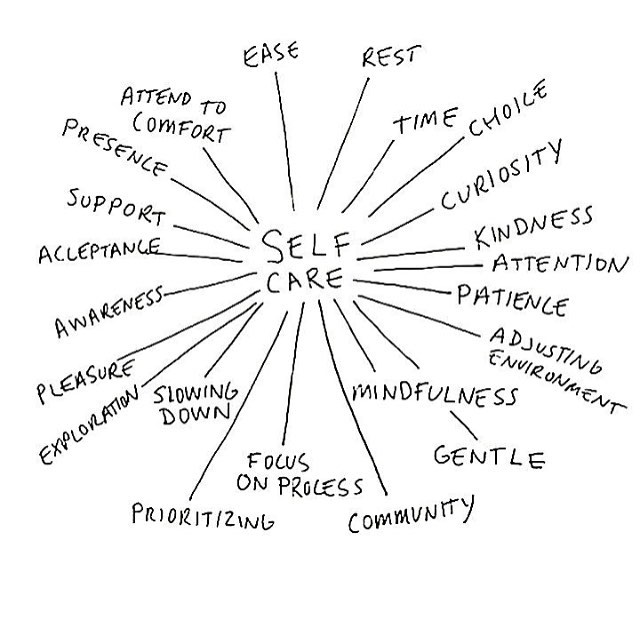
As people in the care-taking professions know, the caretaker is no good if they feel exhausted, spent, and totally worn out.  Parents are the ultimate caretakers–their job is 24/7, including nights, weekends, and vacations.  Self-care is of the utmost importance–not just so the parent feels better, but so your child is getting the best version of you.  When training in any helping professions, students learn about something called “compassion fatigue“.  This phrase refers to how tiring caring can be.  Sure, it is an amazing responsibility, filled with so many positives, but that does not mean it is not enormously exhausting.

So what is self-care? Simply put, it is putting yourself first for at least for a little bit so that you feel some sense of rejuvenation.

14449990_1670204159959261_6550103289518686930_n

Self care could look like this:

  • date night
  • reading a book
  • drinking a cup of coffee on the porch…alone
  • EXERCISE
  • treating yourself in someway
  • spending time with friend
  • a hobby

I can help you identify your needs as a parent and help you find ways to fulfill those needs.

*If other issues arise as result of an honest assessment of how you are doing and a higher level of intervention is deemed appropriate, I can refer you to other appropriate mental health professionals and work collaboratively with them.  As always, our work together is completely confidential.

Why use a Parenting Coach?

Our kids are not born with manuals yet somehow parents feel the expectation to know how to handle all sorts of situations that arise.  Raising kids is complex and just when you think you have a handle on it, they are onto a new stage of development.  This dynamic process makes keeping up with the latest advice and best practices nearly impossible.  I can help give you tools to help you become a better parent.

Through individual or family sessions, I can help evaluate and understand your concerns and current parenting techniques.  Together we will establish goals you have for your sessions and give you different ideas and resources to help you feel more empowered.  I will give you non-judgemental feed back so that you can parent with greater intention.  We will work on issues ranging from common behavioral concerns to more in depth specific problems.  Initial intake sessions occur at the home of the family and include time spent with one or both of the parents and the family as a whole.  This allows me to assess the current situation and allow us to figure out appropriate goals for our sessions.  Follow up sessions will be determined then including frequency and with whom I will be working.

I am a professional NYS certified school counselor who has worked with many families with a wide range of problems and concerns.  I take a non-judegemental approach to working with clients and want them to leave our sessions feeling empowered to have a better family life.  I have taken extensive coursework on child development, social/emotional concerns, motivational psychology, marriage and family therapy, facilitating individual and group counseling, as well as understanding and interpreting assessments.  Our sessions are completely confidential.  I am also a parent of two young boys.

I serve the greater Rochester, NY region.  Please contact me at rocparentcoach@gmail.com or at (585) 420-8838.


Welcome to Parent Coach

Parenting is so difficult yet so, so important.

You want to be the best parent you can for your child but you feel like you might be messing your kid up…for life.  You don’t have to feel that way.  I am a former school counselor who has worked with families on a wide-variety of problems.  I can collaborate with your family and offer a non-judgemental, confidential approach to improving issues so you feel empowered and your relationships at home are more peaceful and fulfilling.

I work with families of all ages.